In Part 1, we looked at the two major ways humans process energy – through our automatic systems and the systems that support our freedom of choice – and how each of these works.
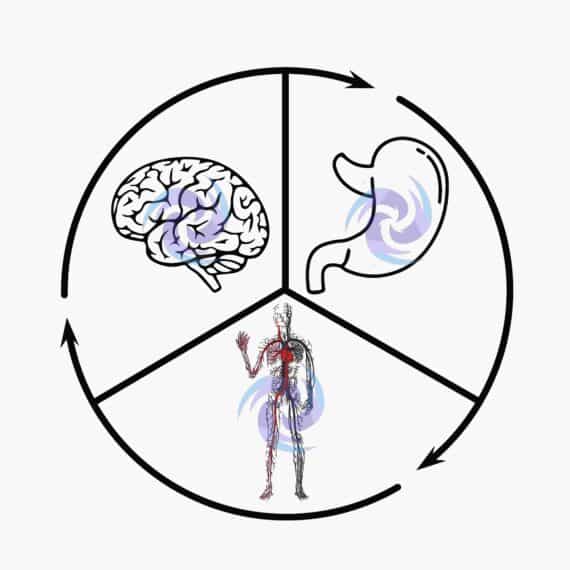
Next, we will consider how the energetic level of our brain, stomach and blood system together are the three ringleaders of the addiction cycle. These systems can get automated by the repetitive and ongoing use of an addictive substance – which essentially hijack these systems to perform in a different way from their natural design and thereby giving power to the addiction cycle.
Let’s break it down what an addiction cycle is:
The National Institute of Health defines addiction as: “a chronic, relapsing disorder characterized by compulsive drug seeking and use – despite adverse consequences. It is considered a brain disorder, because it involves functional changes to brain circuits involved in reward, stress, and self-control.”
And, simply put, any event that is regularly repeated in the same order constitutes a cycle like spring, summer, fall, winter or Monday, Tuesday, Wednesday and so on.
Putting these two together, an addiction cycle is a process that a person has established in their automatic systems to continue a certain, usually euphoric, feeling or state. There then comes a point at which the person is no longer the decision maker and, instead, the substance and the person’s automatic systems are in control – leaving the person’s conscious choice out of the decision loop. This is the ‘chronic relapsing disorder’ part of the addiction cycle.
The three ringleaders: brain, stomach, blood
To delve deeper into the addiction cycle, let’s look at each of the ringleaders and how they work in conjunction and in combination with each other.
Our brain conducts highly essential functions, including providing signals to the many automatic systems that maintain our life such as our digestion, as one example. It’s an incredibly advanced organ and in along with our soul, is designed to make innumerable, extremely precise calculations on our behalf. Imagine every single calculation needed to perform a simple task like sending all the correct signals to our hand when we wish to take a sip of water from a glass. The number of nerves, muscles, tendons and all the other parts involved in this simple action is enormous, and yet it all happens smoothly and flawlessly without a single thought about the complexity of the mechanics.
Yes, our brain is amazing. But it also can be our own worst enemy – if we hand over too much power and allow it to be in the driver’s seat of our life. Because after all, that’s our job! You are not your brain.
From an energetic standpoint, our brain naturally has a huge affinity to fly high. It prefers to process what it considers ‘high octane fuel’ because it makes it feel better and more alive. It loves excitement and new experiences, and it’s completely reliant on us to provide this stimulus.
It’s the part of us that goes to the county fair and says, ‘I want to go on that ride!’ We’ve taught our brain what energies are exciting for it all our lives. And, in return, it can do a multitude of functions on demand. Our experiences reflect directly on how our brain gets wired, and this plays out and affects us every single day.
The brain can also be really bossy, especially when it needs an excitement fix. This is why it’s so important to have worked out a direction and purpose in life. Otherwise – without healthy parameters – our brain will have us floating from one excitement to another, and the art of living life is nonexistent because we abdicate living to our brains. It’s easy to see how the brain can get hijacked by an addictive substance or behavior because of its love for flying on high-octane fuel.
The next ringleader, our stomach, helps to digest and break down physical foods but also plays a big role in the addiction cycle. The stomach can also be referred to as the ‘Moving Center’ energetically speaking because it’s responsible for movement and everything we do repetitively.
As our brain loves to fly high, our stomach loves repetition.
It feels most comfortable when we’re doing things that it already knows how to do. Our stomach doesn’t like surprises like our brain does. The brain gets excited when it can do new things. The moving center or stomach loves it when you settle in to watch a good movie with a bowl of popcorn. It thinks this is heaven.
The stomach has its own way of trying to exert control over our life. It can cause you to mindlessly play video games for hours on end. It does this in cahoots with our brain because the brain gets excited when we win! Our stomach loves the repetition of the game and distracts us so that we forget about time and end up finding ourselves late for an appointment or delaying tasks we promised ourselves we’d accomplish.
We can train our automatic systems to work with us or allow them to take over.
If we allow our stomach to do what it wants all the time, it becomes quite resistant to change. It won’t like it if you try to implement new disciplines; it will require a greater conscious power of repetition to create new patterns. This absolutely can be accomplished, but it takes time, focus and patience to establish these new patterns.
Everything that the brain and stomach do on a repetitive basis gets recorded in our blood systems energetically. Our blood works like the tape recorders we used before digital recordings took over.
So how did these old tape recorders work? The Encyclopedia Britannica explains it simply: “As the tape moves past the recording head, the powder is magnetized in such a way that the tape carries a record of the electric signal. On playing back the tape past the recording head, the signal is reproduced and then converted through a loudspeaker into the original sound wave.”
What? Our blood records stuff?! How does that work? Like the tape, our blood also has a magnetic ability to record and hold that electro-magnetic signal. The magnetic ability comes from the micronutrient of its iron content. Iron is one of the most common magnetic metals around and is utilized by many organs and metabolic processes, including our blood system.
So yes, our blood records and maintains the many patterns we establish by whatever we do repetitively, thereby creating specific electro-magnetic patterns in our blood. Our stomach helps to establish these blood patterns because of its ability to implement the action, and then the blood records those actions and stores them until the moving center calls on the blood to replay that pattern. The more times the action or thought is played out, the more deeply imprinted the blood pattern becomes thus creating a particular habit.
Everything that we say, do, think, long for, love, belong to, believe in gets recorded in our blood and then the blood informs every single cell in our body repetitively as it circulates through every part of us, which then radiates outwardly into our bio-energetic field.
We can choose to superimpose over an unwanted blood pattern or habit using our automatic systems in a conscious way and imparting new ways and habits that we choose instead, repetitively, on a consistent basis, with the power of our conscious thought. This works for some, but others with substance use disorder may need help.
And that’s where the Weiss Method comes in.
The Weiss Method offers a non-invasive, one-on-one treatment using no medication, needles or hypnosis. This energy-based treatment cleans and rebalances the systems at the root cause, freeing the person by interrupting the addiction cycle.
]]>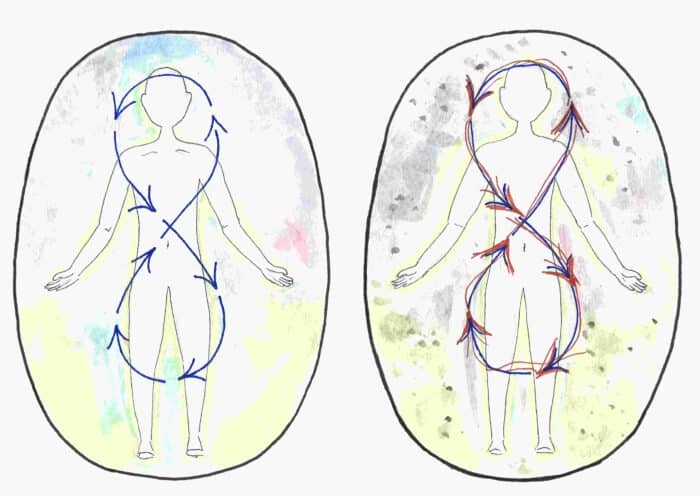
Humans process energy in two major ways – through automatic systems and systems that support our freedom of choice. It is within the automatic systems that the addiction cycle lives.
We don’t have to think about the automatic systems that help us perform a huge number of functions and tasks, from keeping our heart pumping to breathing to digesting food. Tasks that we perform on a repetitive basis ultimately get programmed into our automatic systems as well. Think of riding a bike, for example, we only have to learn how to do that once. Can you imagine if you had to learn how to walk every morning when you got out of bed? Or re-learn how to drive a car every time you get behind the wheel?
Our automatic systems are a marvelous part of our design that allow us to program ourselves to perform a huge array of tasks. They hold onto the learning process of particular proficiencies and are ready to act anytime we ask our systems to perform. Consider a task like typing. When first learning this skill, you have to think about where each character is located on the keyboard. But with more and more practice, you eventually don’t even have to look at the keys – your body’s automatic systems have taken over this process so that you can spend your time thinking about what you want to write about.
Our incredibly efficient automatic systems help us every single day to perform a multitude of tasks so we can live our lives the way we choose – right? Well, as we know, life is not that simple! Since these systems remember everything that we do on a repetitive basis, we have to be careful.
Hijacking the automatic systems
If we’re constantly checking our phone and scrolling through social media every 10 minutes, we program this behavior into our automatic systems. If we want to change this behavior, we must decide that we will not be distracted so easily anymore and work consciously to change the behavior – utilizing our freedom of choice systems.
Alcohol, nicotine, refined sugars and harmful drugs are considered chemically addictive. Part of the reason they’re addictive is that they’re experts at hijacking our automatic systems. The nature of an addictive substance causes a person to crave it increasingly, and the automatic systems – just doing what they’re designed to do – get abused. The substance takes over and can cut the person out of the decision-making process.
The core issue for the addiction cycle lies inside our freedom of choice systems – meaning that at some point, we made a decision, whether consciously or not, to allow the substance into our body – repetitively – thereby setting up the circumstance for our automatic systems to possibly get hijacked. And if they do get hijacked, the addiction cycle begins.
This is why the most important step to sobriety is the conscious decision to stop, as this is where the problem started in the first place – when we made that choice to repetitively allow the substance into our body. Some people can break the addiction cycle by simply making the conscious choice to do so. Other people make that choice but are unable to accomplish the goal to quit without outside help and assistance.
There are many paths to sobriety and recovery. The Weiss Method is one that offers non-invasive, one-on-one treatment with no medication, needles or hypnosis. The energy-based treatment cleans and rebalances a person at the root cause in the automatic systems.
Find more out about how the brain, stomach and blood are the main ringleaders in the addiction cycle and how they get hijacked and take over our lives by listening to or watching “The Addiction Cycle” at Weiss Method USA – YouTube.
]]> What are they and how do they work with the Weiss Method?
Should I have a remote or in person treatment with Weiss Method? We get this question quite a lot, especially in the days of COVID. And honestly, since the pandemic began, most people have preferred at distant treatments. As a practitioner, I have found that not only are they highly effective, but because of the distance, both client and practitioner are much more comfortable in their respective ecologies.
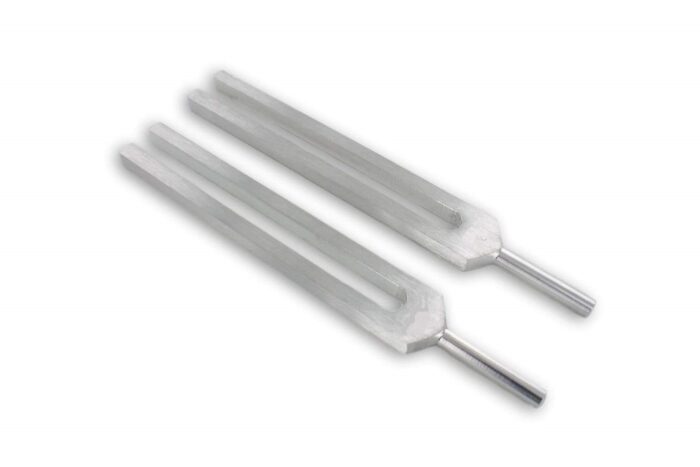
There have been scientific studies done to prove that something does happen when a practitioner and client are working together remotely, but simply put, we explain it in the following way: It works via the ‘Tuning Fork Principle’. When you have two tuning forks on the same frequency and you ring one, the other one vibrates because of the frequency resonance. In physics this is called forced vibration.
Using a picture of the client in a specific posture, and the client on the other end of an open phone line, the Weiss Method treatment works the same way. The picture of the client and the client are like the two tunings forks on the same frequency and the energy easily finds the person and does what it needs to do. The proof that the method works is that clients have successfully mitigated their unwanted habits and addictions at the same rate as if they were in the treatment room with the practitioner. Depending on the type of treatment, the success rate ranges around eighty five percent.
Here’s to saving a lot wear and tear that traveling causes along with the capability to treat clients all over the world!

Kevin came to the Weiss Method whilst he was undergoing treatment for cancer and successfully quit alcohol after many years and many tries. He found the method worked so well, he came back to successfully quit smoking. Click here to read his full story, recently published in Journey Magazine, by Niki Curtis.